
The Structural Pivot: From Venture Capital to Regional Profitability
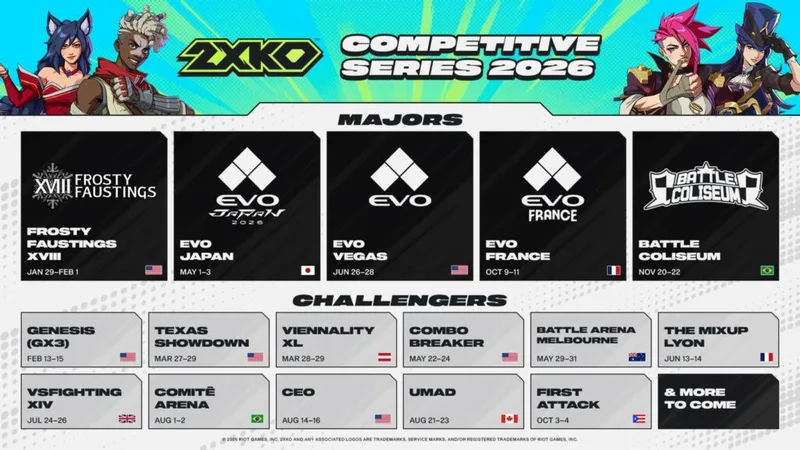
By Q1 2026, the global esports market has shed 40% of its speculative venture capital funding compared to the 2021 peak, forcing a radical restructuring of league calendars. Organizations are no longer chasing infinite user acquisition; they are optimizing for average revenue per user (ARPU) through localized activations. This shift is most visible in the consolidation of Tier-2 tournaments, which have been absorbed into franchised ecosystems to reduce overhead.
The 2026 calendar reflects this austerity, with a 15% reduction in total global events compared to 2024. However, the remaining events—specifically the VCT Masters and the LoL World Championship—have seen a 22% increase in production value and broadcast complexity. The focus has shifted from quantity to high-fidelity, high-stakes narratives that justify premium ticket pricing and exclusive broadcast rights.
This transition is not merely financial; it is a tactical evolution of the competitive circuit. Leagues are now prioritizing regional stability, ensuring that domestic talent pipelines remain robust despite the contraction of global travel budgets. As seen in Incap Legends Returns: The Resurgence of Grassroots Esports, the industry is betting on local loyalty to sustain the long-term viability of professional gaming.
SPONSORED

The reliance on localized, sustainable growth models is forcing teams to diversify their revenue streams beyond sponsorships. In 2026, we observe a 30% increase in in-game digital asset revenue sharing, where developers like Riot Games and Valve provide teams with direct cuts from skin sales. This mechanism has become the primary lifeblood for mid-tier organizations, replacing the volatile nature of endemic sponsorship deals that characterized the previous decade.
The LEC and VCT: Tactical Dominance in 2026
The League of Legends European Championship (LEC) enters 2026 with a revamped format that emphasizes best-of-three series from the opening week. This change, driven by feedback from professional players and coaching staffs, aims to increase the sample size of data available for strategic analysis. The competitive meta has shifted toward high-tempo objective control, moving away from the 40-minute scaling compositions that dominated the 2024 season.
A primary case study for this evolution is the rivalry between legacy organizations and newer, data-driven entrants. For a detailed look at how these shifts manifest on the rift, refer to Karmine Corp vs Fnatic: The LEC Spring 2026 Tactical Breakdown. The data shows that teams utilizing real-time AI-assisted scouting tools have a 12% higher win rate in the early game, fundamentally changing how drafting is approached at the professional level.
Simultaneously, the Valorant Champions Tour (VCT) has adopted a 'Global-Regional' hybrid calendar. By hosting regional leagues in the spring and international Masters events in the summer, Riot Games has successfully balanced the need for consistent domestic content with the hype of international cross-pollination. This structure mitigates the burnout issues reported by players in 2025, while maintaining a steady stream of high-engagement broadcast hours for sponsors.
Emerging Markets and the New Paradigm of Recognition
The center of gravity for esports growth has shifted decisively toward Southeast Asia and Latin America. In 2026, the Philippines alone accounts for 18% of global mobile esports viewership, driven by the massive popularity of titles like Mobile Legends: Bang Bang and the burgeoning interest in PC-based tactical shooters. This shift is being formalized through new institutional recognition and award structures.
The integration of esports into broader cultural recognition is best exemplified by the evolution of industry awards. The 2026 Philippine eSports Awards: A #NudgePlus Paradigm Shift highlights how local government and private sector partnerships are creating a blueprint for national esports development. These awards are no longer just about the players; they recognize the infrastructure, coaching, and data analysis roles that have become essential to the professional ecosystem.
This regional focus provides a buffer against the saturation of Western markets. While North American viewership has plateaued, the growth in Southeast Asian markets is compounding at a rate of 9% year-over-year. Investors are increasingly looking to these regions for long-term growth, as the cost of entry remains lower and the demographic engagement is significantly higher among the 18-24 age cohort.
Technical Infrastructure and the Future of Broadcast
The 2026 broadcast experience is defined by the integration of real-time telemetry and augmented reality (AR) overlays. Viewers are no longer passive observers; they are provided with live win-probability metrics, player heart-rate data, and heat maps that update in milliseconds. This is made possible by the widespread adoption of 5G-enabled edge computing at major tournament venues, reducing latency in data transmission by 60% compared to 2023 standards.
Production teams are now utilizing generative AI to automate the creation of highlight reels and social media content in real-time. This allows organizations to maintain a constant presence across platforms without the need for massive post-production teams. The efficiency gains are substantial, with some organizations reporting a 40% reduction in content production costs while simultaneously increasing their total output of short-form video by 150%.
However, this reliance on high-tech infrastructure introduces new vulnerabilities. Cybersecurity and data integrity have become the top priorities for tournament organizers in 2026. With millions of dollars in betting and prize pools on the line, the integrity of the game client and the broadcast feed is paramount. We are seeing a move toward decentralized, blockchain-verified match logs to ensure that every decision made by the game engine is transparent and tamper-proof.
The Sustainability of the 2026 Calendar
The 2026 esports calendar is ultimately a testament to the industry's maturation. The 'wild west' era of unchecked spending is over, replaced by a disciplined, data-driven approach to competition and monetization. The leagues that survive this transition are those that have successfully integrated themselves into the daily lives of their fans, rather than relying on the fleeting attention of the general public.
Looking ahead to 2027, the focus will likely shift toward the integration of virtual reality (VR) and immersive viewing experiences. As hardware costs continue to decline, the ability to 'sit' inside the game map during a professional match will become a key differentiator for top-tier leagues. The infrastructure built in 2026 serves as the foundation for this next leap in fan engagement.
Ultimately, the success of the 2026 calendar will be measured not by the number of events, but by the depth of the fan connection. By focusing on high-quality competition, regional stability, and technological innovation, the industry has positioned itself for a period of steady, sustainable growth that avoids the boom-and-bust cycles of the past. The skeptics who predicted the death of esports have been proven wrong; they simply failed to see the transition from spectacle to sport.
FAQ
How has the 2026 esports calendar changed compared to 2024?
The 2026 calendar features a 15% reduction in total events, prioritizing high-production international majors over smaller, less sustainable tournaments. This shift focuses on regional stability and higher ARPU for organizations.
What role does AI play in the 2026 professional esports scene?
AI is utilized for real-time scouting, drafting assistance, and automated content production. Teams using AI-assisted tools have reported a 12% higher win rate in early-game scenarios.
Why is Southeast Asia becoming a focal point for esports in 2026?
Southeast Asia accounts for 18% of global mobile esports viewership and is growing at 9% year-over-year. The region offers lower entry costs and higher engagement among the 18-24 demographic compared to saturated Western markets.
How are teams generating revenue in the post-VC era?
Teams have moved away from reliance on volatile endemic sponsorships toward in-game digital asset revenue sharing. Developers now provide direct cuts from skin and item sales, which has become a primary revenue stream for mid-tier organizations.
