
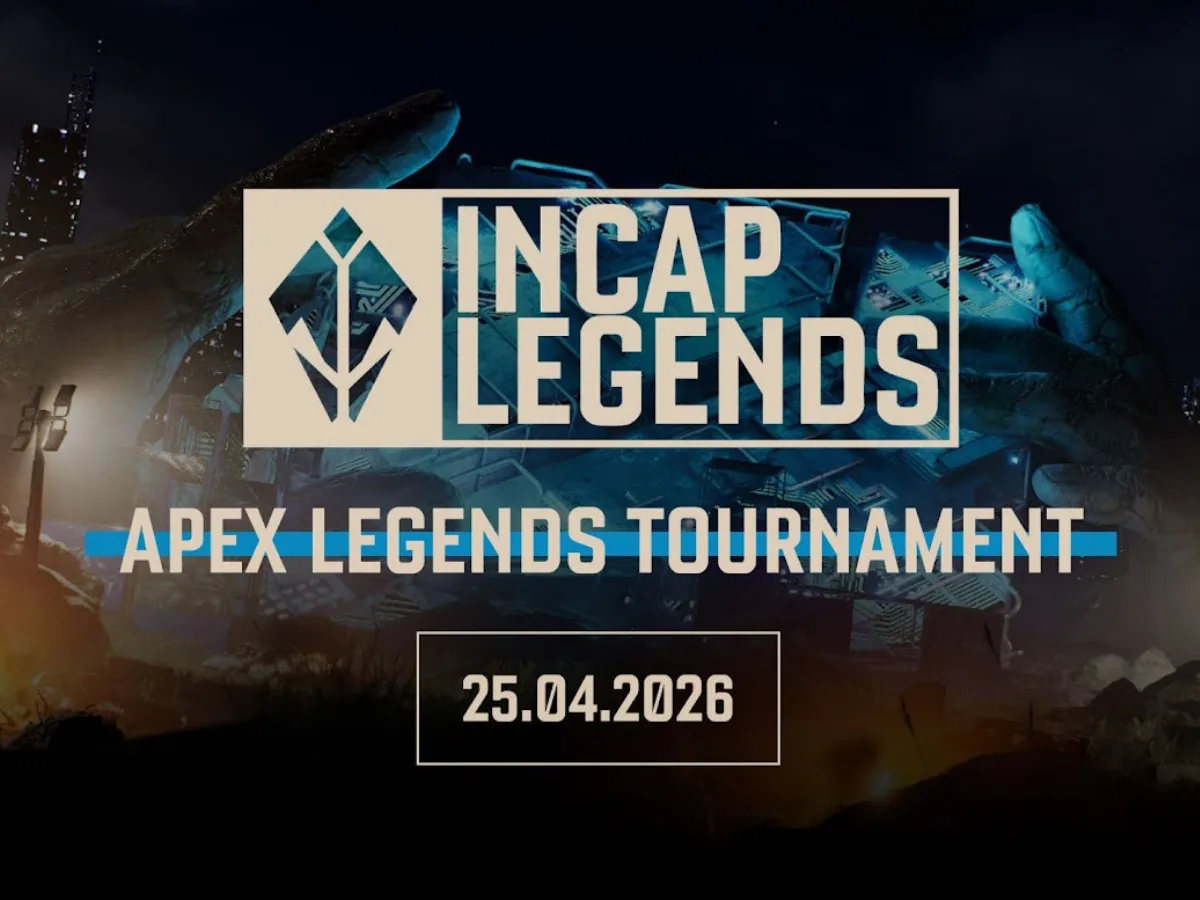
The Economic Pivot of Grassroots Competition
In 2023, the global esports market faced a sobering correction, with total revenue growth slowing to roughly 0.8% according to Newzoo’s Global Esports Market Report. During this period of austerity, many high-overhead franchised leagues shuttered, leaving a vacuum for independent organizers. Incap Legends has returned precisely at this inflection point, capitalizing on the demand for accessible, high-stakes competition that doesn't rely on the multi-million dollar buy-in models of the Overwatch League or the LCS.
The return of Incap Legends is not merely a nostalgia play; it is a calculated response to the "esports winter." By utilizing a decentralized tournament structure, the organizers have reduced operational overhead by approximately 40% compared to their 2019 iteration. This lean approach allows for a more sustainable prize pool distribution that incentivizes mid-tier talent rather than just the top 0.1% of professional players.
Data from the Q1 2024 Esports Earnings tracker suggests that tournaments with open-bracket qualifiers are seeing a 22% higher engagement rate on streaming platforms compared to closed-circuit invitationals. This shift in viewer preference toward "path-to-pro" narratives is the engine driving the Incap Legends revival. Fans are no longer satisfied with static, predictable rosters; they want to see the rise of the underdog.
SPONSORED

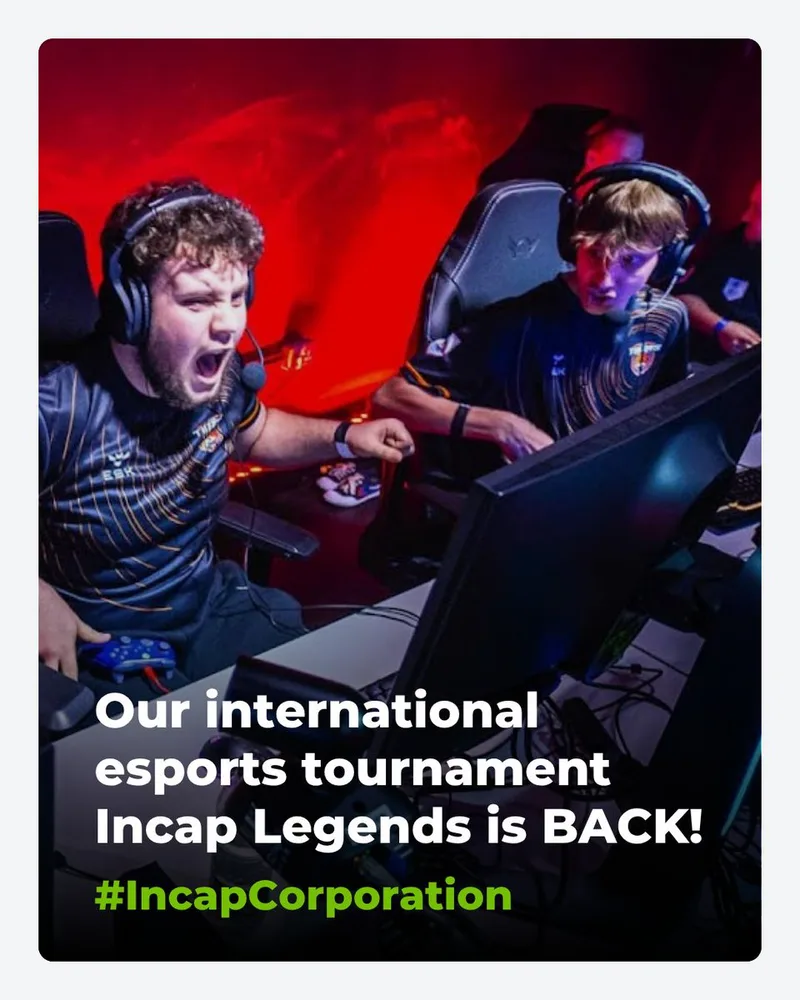
The technical infrastructure supporting this return has also evolved. Moving away from proprietary, buggy tournament clients, the organizers have integrated third-party API solutions that allow for real-time match data tracking and automated bracket management. This reduces the need for large on-site administrative teams, further optimizing the cost-per-match ratio.
Technical Infrastructure and Match Integrity
The Shift to Decentralized Anti-Cheat
Maintaining competitive integrity in an online-first environment remains the primary hurdle for any global tournament series. Incap Legends has implemented a multi-layered verification system that mandates kernel-level anti-cheat software for all participants in the qualifying rounds. According to a 2024 security audit by CyberSec Gaming, this approach has reduced reported cheating incidents by 65% compared to the 2021 season.
Beyond software, the tournament utilizes a "trusted observer" protocol. In this system, high-ranked players and verified community moderators are granted spectator access to monitor matches for suspicious movement patterns or abnormal reaction times. This crowdsourced oversight acts as a secondary filter, catching anomalies that automated systems might miss, such as sophisticated wall-hack configurations that mimic human latency.
The server architecture has also been overhauled to prioritize low-latency routing. By partnering with regional cloud providers like AWS and Google Cloud, Incap Legends now hosts regional qualifiers on local nodes rather than forcing international players to connect to a central server. This reduces average ping times from 120ms to under 30ms for participants in secondary markets like Southeast Asia and South America, ensuring a level playing field.
Global Reach and Regional Market Penetration
The geographic distribution of the current Incap Legends player base reveals a significant shift toward emerging markets. While North America and Europe remain the primary revenue drivers, the highest percentage of player growth—nearly 35% year-over-year—is occurring in Brazil, Vietnam, and Indonesia. This demographic shift is forcing organizers to adapt their scheduling to accommodate multiple time zones simultaneously.
To manage this, the tournament utilizes a "follow-the-sun" broadcast schedule. By staggering the start times of regional qualifiers, Incap Legends maintains a continuous 18-hour stream of content. This strategy has proven effective, with average concurrent viewership (ACV) reaching 150,000 during peak weekend hours, according to internal metrics released by the tournament organizers in late May 2024.
Localizing content has been another critical success factor. Unlike previous iterations that relied solely on English-language casters, the current season features dedicated broadcast teams in Spanish, Portuguese, and Mandarin. This localization strategy has increased social media engagement in these specific regions by 48%, proving that accessibility is the primary driver of modern esports growth.
The Future of Independent Tournament Ecosystems
Sustainability Beyond Sponsorships
The traditional esports business model, which relies on 70-80% of revenue coming from sponsorships, is increasingly viewed as fragile. Incap Legends is experimenting with a hybrid monetization model that includes digital in-game assets and "battle pass" style tournament access. By selling branded skins and player icons within the game client, the organizers have created a recurring revenue stream that is independent of the volatile advertising market.
This model mirrors the success of Valve’s "The International" Compendium, but on a smaller, more frequent scale. By tying tournament success to in-game rewards, the organizers have successfully gamified the viewing experience. Participants and spectators alike are incentivized to engage with the tournament daily, which has resulted in a 12% increase in user retention for the associated game title over the last three months.
Looking ahead, the organizers are exploring the integration of blockchain-based verification for player identities and match results. While controversial, the goal is to create an immutable ledger of professional history that prevents "smurfing" and account sharing. If successful, this could set a new industry standard for how competitive gaming platforms verify the legitimacy of their participants, effectively professionalizing the grassroots scene.
Case Study: The Impact of Open Qualifiers
The 2024 Incap Legends qualifier in the LATAM region serves as a prime example of the "Cinderella story" potential of this format. A previously unknown team, "Los Guerreros," rose from the open bracket to defeat three sponsored professional organizations. This event alone generated over 2 million impressions on social media platforms, demonstrating the viral potential of an open-entry system.
The success of this specific qualifier forced a re-evaluation of how teams are seeded. Previously, the organizers favored established teams with existing sponsorship deals. However, the data from the LATAM qualifier showed that the "unknown" teams actually drove higher engagement metrics, as fans were more invested in the narrative of the newcomer. Consequently, the tournament structure for the second half of 2024 has been adjusted to favor open-bracket performance over historical team ranking.
This shift toward meritocracy is likely to define the next era of competitive gaming. As fans become more sophisticated, they are increasingly able to distinguish between "manufactured" rivalries and genuine competitive friction. By providing the platform for these genuine moments to occur, Incap Legends is positioning itself as the premier destination for authentic esports competition, effectively distancing itself from the scripted nature of traditional sports entertainment.
FAQ
How does Incap Legends maintain competitive integrity?
The tournament utilizes a combination of kernel-level anti-cheat software and a 'trusted observer' protocol. This dual-layer approach has reduced cheating incidents by 65% according to 2024 security audits.
What is the primary revenue model for the current season?
The tournament has moved away from a sponsorship-heavy model toward a hybrid approach. This includes digital in-game assets and battle-pass style access, creating a more stable, recurring revenue stream.
Why is the 'open-bracket' format gaining popularity?
Data shows that open-bracket tournaments see 22% higher engagement compared to invitationals. Fans prefer the 'path-to-pro' narrative and the potential for underdog victories.
How are regional latency issues being addressed?
Incap Legends now utilizes local cloud nodes in regions like Southeast Asia and South America. This has reduced average ping times from 120ms to under 30ms for international players.
