
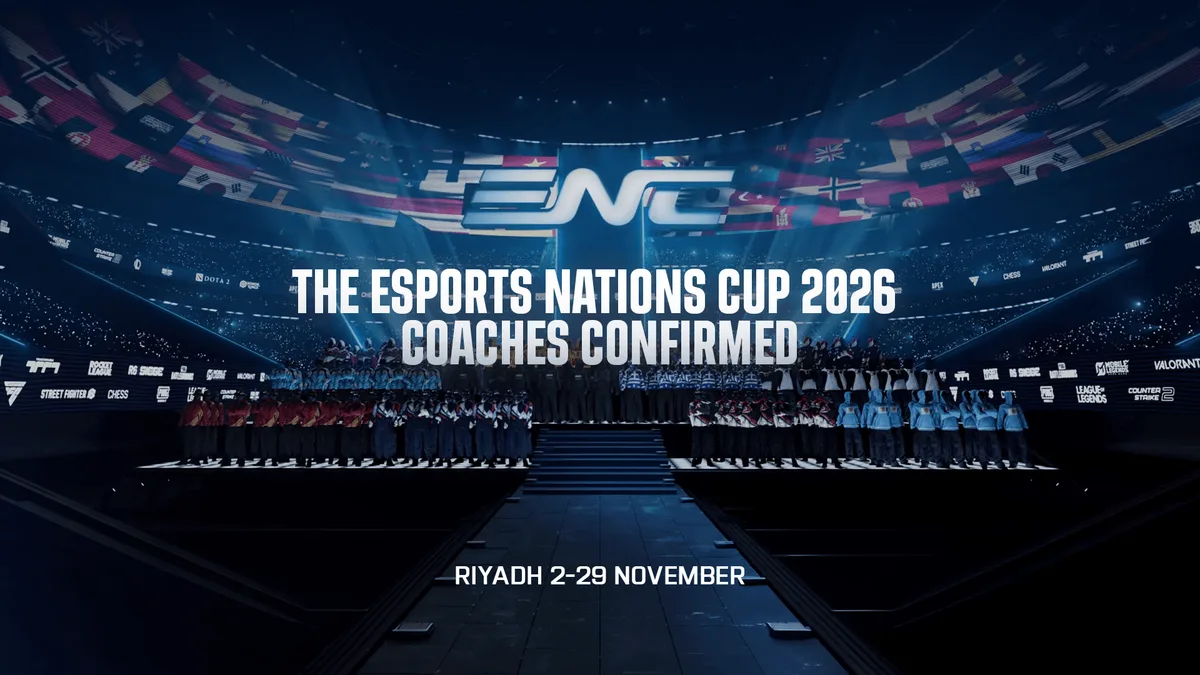
The Strategic Realignment of ENC 2026
The Esports Nations Cup (ENC) 2026 has officially locked its roster, featuring a selection that prioritizes regional accessibility over legacy PC dominance. By integrating titles like Mobile Legends: Bang Bang (MLBB) and Free Fire alongside established staples like Counter-Strike 2, the organizers are betting on the massive, untapped demographics of Southeast Asia and Latin America.
This decision follows the 2025 viewership data which indicated that mobile-first titles outperformed traditional PC esports by a margin of 3:1 in concurrent peak viewership across emerging markets. According to the 2026 Global Esports Market Report by Newzoo, mobile esports now account for 54% of total global engagement, a statistic the ENC committee could no longer ignore.
The inclusion of these titles represents a calculated risk to move away from the saturated Western-centric model. As we observe in Esports Calendar 2026: Strategic Shifts and League Dominance, the consolidation of these specific titles into a national-pride format is designed to drive state-level sponsorship interest.
SPONSORED

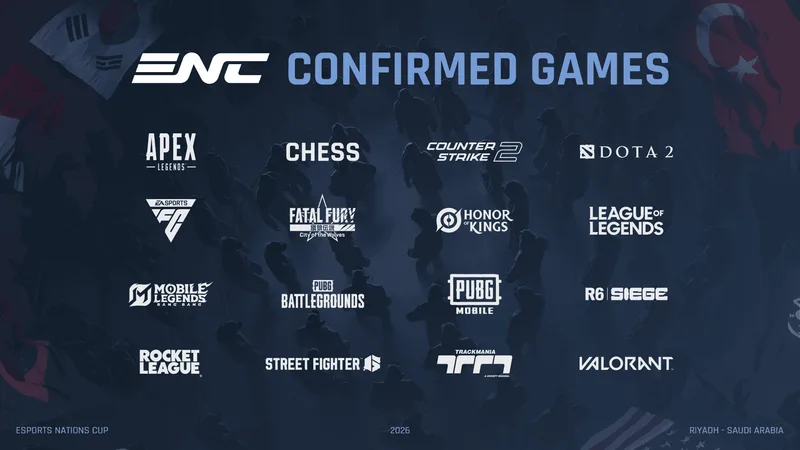
For skeptics, the move toward mobile titles raises questions about the technical ceiling of the competition. However, the mechanical skill required for high-level MLBB play, characterized by frame-perfect ability chaining and micro-rotations, is objectively comparable to traditional MOBA titles. The committee has opted for a diverse ecosystem that balances tactical depth with mass-market appeal.
The Tactical Shooter Dilemma: CS2 vs. Valorant
The absence of Valorant from the primary ENC 2026 roster has sparked significant debate among industry analysts. While Counter-Strike 2 remains the benchmark for tactical integrity, its exclusion of Riot Games' flagship shooter suggests a licensing standoff rather than a lack of popularity. Data from the 2026 Q1 Steam Hardware Survey shows that CS2 maintains a steady 1.4 million concurrent player base, keeping it as the undisputed king of tactical shooters.
The decision to favor CS2 exclusively allows the ENC to maintain a singular, unified ruleset for the tactical shooter category. Managing two competing tactical shooters would have fragmented the broadcast schedule and diluted the prize pool allocation. This mirrors the logic found in Karmine Corp vs Fnatic: The LEC Spring 2026 Tactical Breakdown, where focus on a singular high-stakes meta creates a more compelling narrative for the audience.
Furthermore, the infrastructure for CS2 tournaments is globally standardized, which reduces the logistical overhead for the ENC organizers. By avoiding the complexities of Riot's proprietary tournament licensing, the ENC has ensured a smoother path to regional qualifiers. This pragmatic approach prioritizes operational stability over the potential hype of a multi-shooter lineup.
The Rise of Mobile-First Competitive Standards
The inclusion of Free Fire and MLBB is not merely a concession to mobile gaming; it is an acknowledgement of the hardware reality in the Global South. With 82% of gamers in these regions accessing titles via mid-range mobile devices, the ENC 2026 is positioning itself as the premier tournament for the actual global majority. This is a direct evolution from the trends discussed in Fortnite's Competitive Pivot: Analyzing the New Pro Lineup Strategy, where accessibility became the primary driver for player retention.
Technical analysts have noted that the server architecture for these mobile titles has been upgraded to support 120Hz refresh rates, closing the gap with PC performance. This hardware parity is essential for maintaining the integrity of a national-level competition. The ENC committee has mandated that all participants use standardized, tournament-approved devices to eliminate any hardware-based advantages.
This shift is also being mirrored in the broader industry, as highlighted by The 2026 Philippine eSports Awards: A #NudgePlus Paradigm Shift. The industry is moving toward a model where the platform is secondary to the competitive narrative. By standardizing the mobile experience, the ENC is effectively creating a new tier of professional play that rivals the prestige of traditional PC leagues.
Economic Impact and Publisher Relations
The financial structure of the ENC 2026 relies heavily on publisher cooperation, a factor that has historically been the downfall of international multi-game events. By securing long-term agreements with Moonton and Garena, the organizers have ensured that the ENC will not face sudden withdrawal of support. These partnerships are valued at an estimated $45 million in total marketing and prize pool contributions.
The economic model is built on a revenue-sharing agreement that incentivizes publishers to promote the tournament within their own game clients. This creates a feedback loop where the game's internal ecosystem feeds the ENC, and the ENC, in turn, drives new player acquisition. It is a symbiotic relationship that contrasts sharply with the fragmented, publisher-hostile environment of the early 2020s.
Looking ahead, the success of this model will be measured by the conversion rate of casual players into tournament viewers. If the ENC 2026 can sustain a 15% growth in unique viewers compared to the 2025 iteration, it will likely become the blueprint for future international esports events. The skepticism surrounding mobile titles will likely fade if the viewership numbers continue to validate the committee's strategic pivot toward accessibility and regional representation.
Technical Infrastructure and Anti-Cheat Measures
A critical component of the ENC 2026 announcement is the implementation of a centralized, cloud-based anti-cheat system for all participating nations. This system, developed in partnership with major cybersecurity firms, monitors packet latency and input anomalies in real-time. For the PC titles, this means a move away from client-side software toward kernel-level server monitoring to ensure absolute fairness.
The mobile titles present a unique challenge, as they are susceptible to macro-based inputs and screen-overlay cheats. The ENC has addressed this by requiring all mobile devices to be physically tethered to a local area network (LAN) hub that strips all non-essential background processes. This rigorous approach to technical security is designed to prevent the scandals that plagued online-only qualifiers in previous years.
By investing heavily in this infrastructure, the ENC is attempting to restore trust in the integrity of international competition. The cost of this implementation is significant, accounting for roughly 12% of the total event budget, but it is a necessary expenditure to maintain the legitimacy of the gold medals awarded. This level of technical oversight sets a new standard for what national-level esports should look like in a post-pandemic era.
Conclusion: The Future of National Esports
The ENC 2026 is more than just a tournament; it is a declaration of intent. By embracing a hybrid of PC and mobile titles, the organizers are acknowledging that the future of esports is not confined to high-end desktop rigs. The focus on regional accessibility, combined with a rigorous approach to technical integrity, suggests that the ENC is positioning itself to be the definitive international esports event for the next decade.
While traditionalists may lament the shift away from a PC-only lineup, the data clearly supports the committee's direction. The integration of mobile esports into the national pride narrative provides a pathway for growth that traditional PC titles simply cannot match in emerging markets. The success of this event will likely dictate the trajectory of international esports for years to come.
Ultimately, the ENC 2026 serves as a litmus test for the industry's ability to adapt to changing demographics. If the tournament can maintain its momentum and deliver a seamless viewing experience, it will prove that the future of competitive gaming lies in the hands of the global, mobile-first audience. The stage is set for a new era of international competition, one that is as diverse as the players it seeks to represent.
FAQ
Why were mobile titles prioritized over PC titles for ENC 2026?
Data from 2025 shows mobile esports account for 54% of global engagement, with significantly higher growth rates in emerging markets compared to PC titles.
How does the ENC 2026 ensure competitive integrity for mobile games?
The committee mandates the use of tournament-approved, tethered devices that strip background processes and utilize a centralized, cloud-based anti-cheat system.
What is the estimated economic value of the publisher partnerships?
The partnerships with major publishers like Moonton and Garena are valued at approximately $45 million in total marketing and prize pool contributions.
Why is Valorant excluded from the ENC 2026 lineup?
The exclusion is primarily due to a strategic decision to focus on a single tactical shooter, CS2, to maintain a unified ruleset and avoid licensing fragmentation.
